Overview
Many childhood eye conditions — refractive errors, lazy eye (amblyopia), squint, watering eyes, allergies — respond best when identified early, while the visual system is still adaptable. Children rarely complain of poor vision; they simply adapt. That is why structured eye checks matter even when a child seems fine.
A pediatric eye consultation is built around the child: play-based vision testing for little ones, patience with anxiety, and clear guidance for parents on what needs treatment, what needs watching, and what is normal.
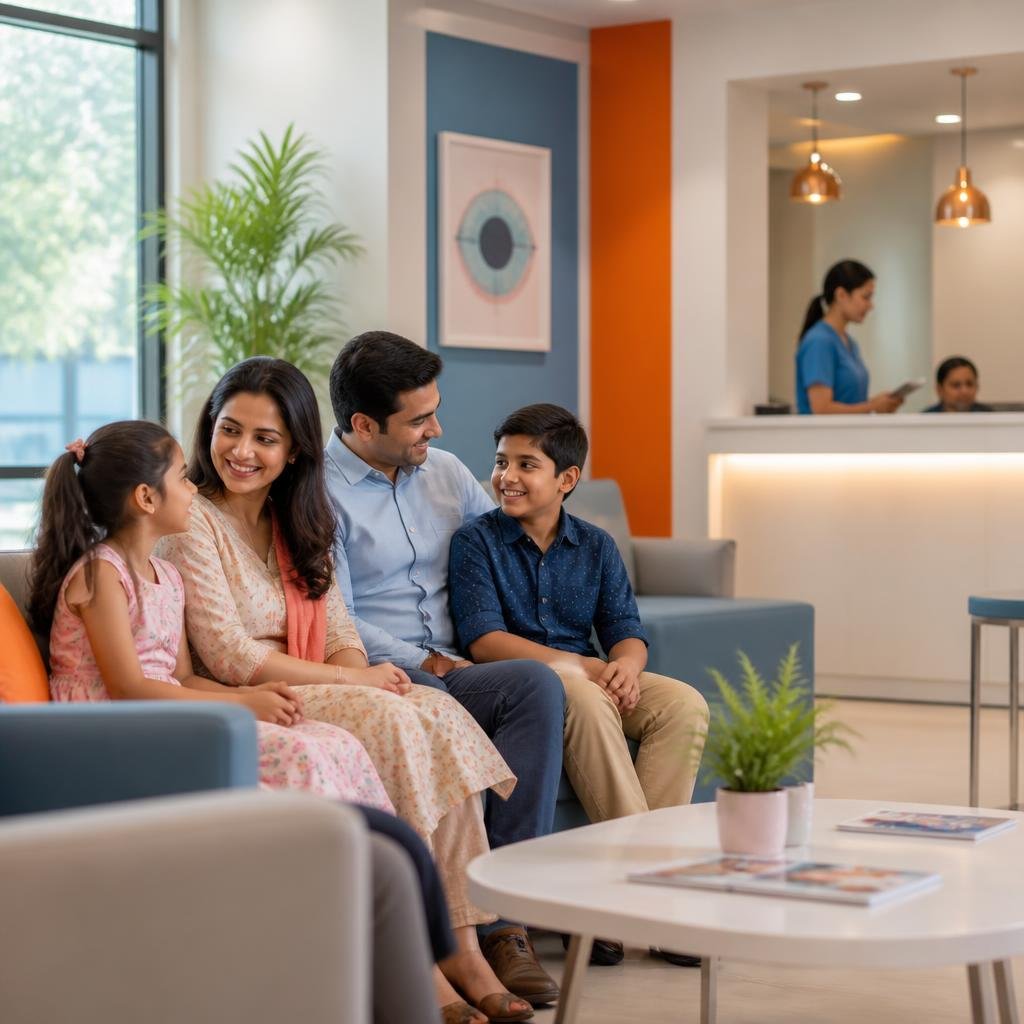
Educational image only. It is not a photograph of a patient, procedure, or hospital facility.
Common Symptoms
- Sitting very close to screens or books
- Frequent eye rubbing or blinking
- Head tilt or covering one eye
- Difficulty reading the classroom board
- Eyes appearing misaligned
- Persistent watering or discharge
- Headaches while studying
Possible Causes
- Refractive errors (need for glasses)
- Amblyopia (lazy eye)
- Squint / misalignment
- Blocked tear drainage
- Allergies
- Developmental variations
Risk Factors
- Family history of glasses, squint or lazy eye
- Prematurity or low birth weight
- Developmental conditions
- High screen time with little outdoor play (for myopia progression)
When to Consult
A routine first eye check is sensible even without symptoms; seek one promptly if you notice any warning sign, if school screening flags a problem, or if there is a family history of childhood eye disease.
Evaluation Process
- Age-appropriate vision testing
- Eye alignment and movement assessment
- Cycloplegic (drops) refraction for accurate glasses power
- Front and back eye examination
- Discussion of findings with parents
Available Management Options
- Glasses when needed
- Amblyopia therapy (patching / penalisation)
- Squint observation, glasses or surgery as appropriate
- Allergy and watering-eye care
- Myopia-control strategies where suitable
- School and habit guidance for parents
The right option for you depends on examination findings and will be discussed before any treatment.
Follow-Up Information
Children’s eyes change as they grow, so review intervals are part of the care plan — from a few months for amblyopia therapy to annual checks for stable glasses wearers.
Frequently Asked Questions
Discuss This with Dr. Khushbu Partani
Consultations at Shree Retina Eye Hospital, Raipur. Your requested date and time are subject to confirmation by the appointment team.
Medically reviewed by Dr. Khushbu Partani · Last reviewed: September 2026 — VERIFY REVIEW DATE WITH DOCTOR BEFORE PUBLISHING