Overview
The visit usually begins with a conversation about your child’s history and your concerns. Vision is checked with age-appropriate methods — picture charts for young children, letter charts for older ones. Eye alignment, movements and the front of the eye are examined, often as a "torch game" for little ones.
Eye drops are commonly used to relax the focusing muscle so the true glasses power can be measured (cycloplegic refraction) and to allow a look at the back of the eye. The drops blur near vision for several hours — this is expected and temporary.
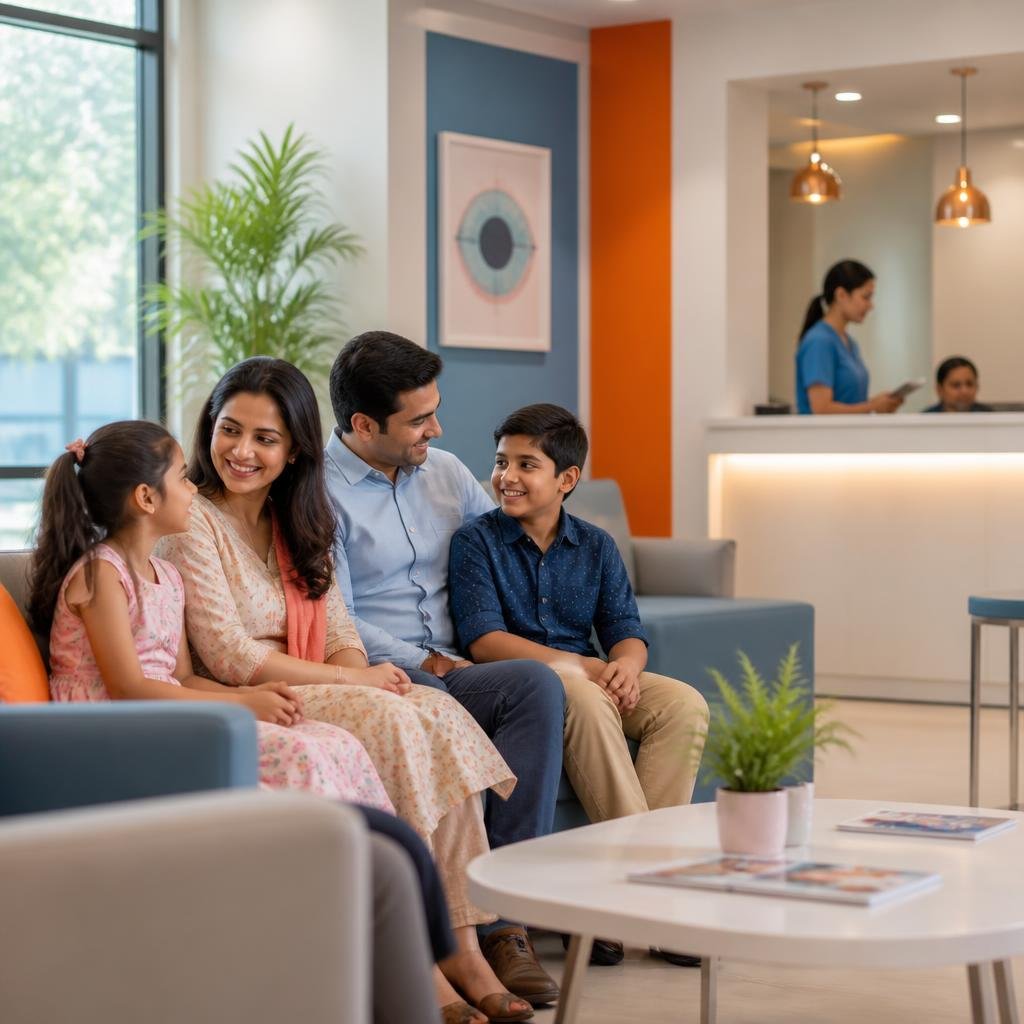
Educational image only. It is not a photograph of a patient, procedure, or hospital facility.
Risk Factors
- Family history of childhood eye problems
- Prematurity
- Failed school vision screening
When to Consult
Routine screening is wise even without complaints; come sooner after a failed school screening, teacher concerns, or any sign such as squint, head tilt or sitting very close to screens.
Evaluation Process
- History and parental concerns
- Age-appropriate vision testing
- Alignment and eye-movement check
- Cycloplegic refraction
- Retinal examination
Available Management Options
- Glasses if needed
- Treatment plan for amblyopia or squint when found
- Reassurance and review schedule when all is well
The right option for you depends on examination findings and will be discussed before any treatment.
Follow-Up Information
The review interval depends on findings — you will leave knowing exactly when and why to return.
Frequently Asked Questions
Discuss This with Dr. Khushbu Partani
Consultations at Shree Retina Eye Hospital, Raipur. Your requested date and time are subject to confirmation by the appointment team.
Medically reviewed by Dr. Khushbu Partani · Last reviewed: September 2026 — VERIFY REVIEW DATE WITH DOCTOR BEFORE PUBLISHING