
Overview
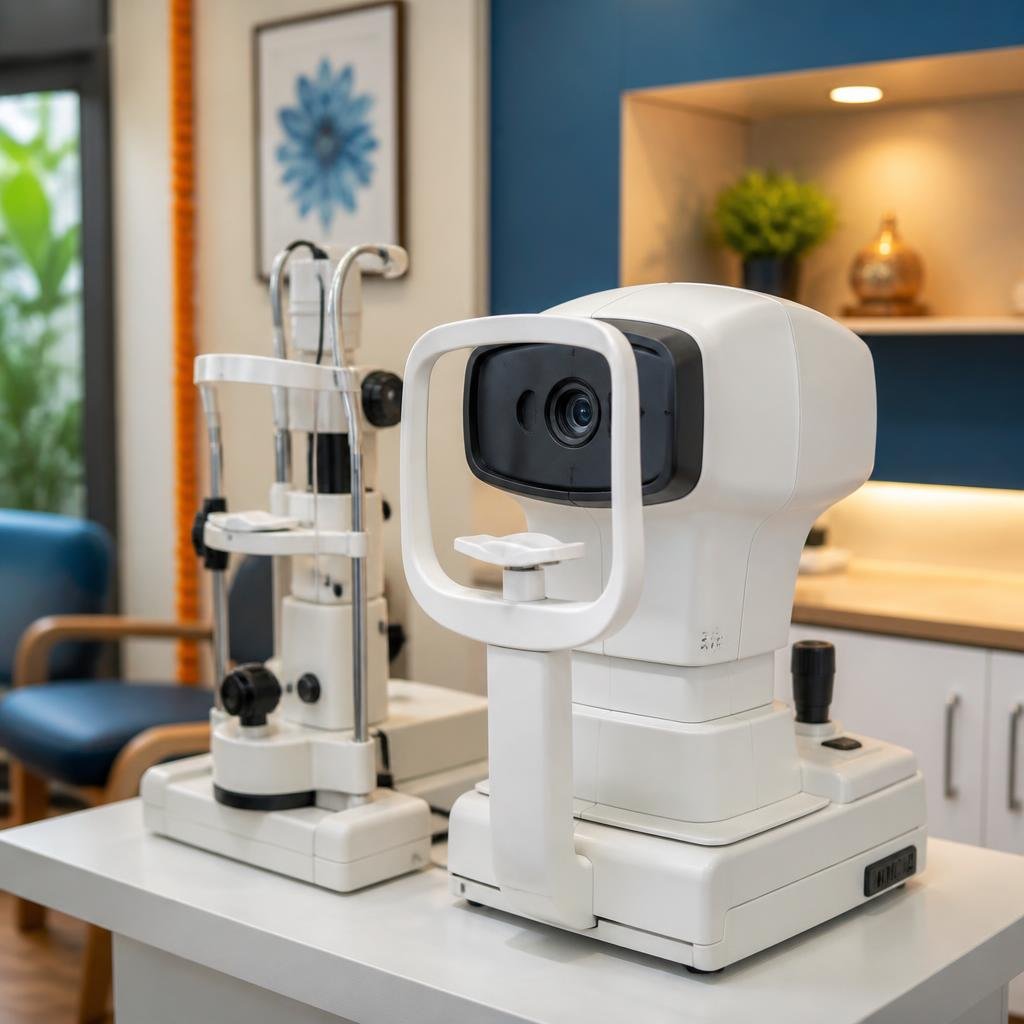
During a cataract evaluation, the front and back of the eye are examined carefully. Vision and glasses power are measured, and the lens is examined under magnification. The health of the retina and optic nerve is also checked, because other conditions can affect the final visual outcome.
If surgery is being considered, painless measurements of the eye (biometry) are taken to calculate the power of the artificial lens. You will have time to ask questions before any decision is made.
Educational image only. It is not a photograph of a patient, procedure, or hospital facility.
Common Symptoms
- Blurred or misty vision
- Glare while driving at night
- Needing brighter light to read
- Glasses power changing repeatedly
Possible Causes
- Age-related lens changes
- Diabetes or other medical conditions
- Eye injury or inflammation
- Certain long-term medicines
Risk Factors
- Age above 60
- Diabetes
- Smoking
- Family history
When to Consult
Book an evaluation when vision changes begin to interfere with daily activities, or when your glasses no longer provide clear vision.
Evaluation Process
- History and symptom discussion
- Visual acuity and refraction
- Slit-lamp lens examination
- Dilated retinal examination
- Biometry and scans when surgery is planned
Available Management Options
- Observation with periodic review for early cataract
- Glasses update where useful
- Surgical planning with lens counselling when indicated
The right option for you depends on examination findings and will be discussed before any treatment.
Follow-Up Information
You will be told whether review is needed and when. If surgery is planned, the pre-operative instructions will be explained step by step.
Frequently Asked Questions
Discuss This with Dr. Khushbu Partani
Consultations at Shree Retina Eye Hospital, Raipur. Your requested date and time are subject to confirmation by the appointment team.
Medically reviewed by Dr. Khushbu Partani · Last reviewed: September 2026 — VERIFY REVIEW DATE WITH DOCTOR BEFORE PUBLISHING